Live and ready

Safety Sentinel is 100% built, fully tested, and online right now. No beta, no waitlist, no missing pieces, and nothing on this page waiting on a future release. Every workflow has been built, run, and verified from first click to final report, and the platform is live in production and accepting customers today.

Every feature live in productionNo broken workflows, no dead endsSign up and start reporting today14-day free trial, no credit card
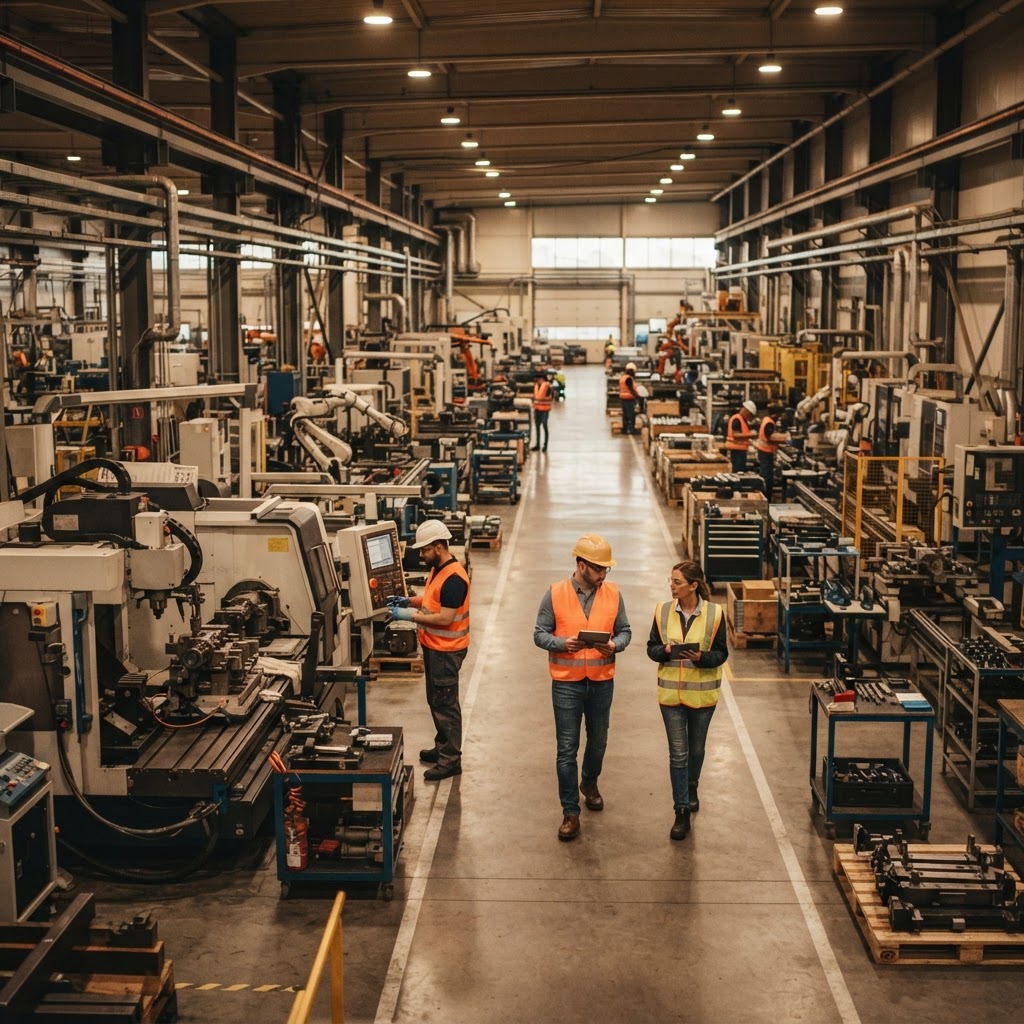
Safety team on a manufacturing floor
The Complete Platform Brief

Every safety tool your facility needs. One platform. One flat price.

Safety Sentinel is the only safety operating system built for the plant floor instead of the boardroom. A worker reports a hazard in under thirty seconds from a phone, a tablet on the wall, or a shared kiosk. Your safety manager gets a live resolution queue instead of a filing cabinet. An OSHA inspector gets a print-ready packet instead of an apology.

Most safety software tells you what already happened. Safety Sentinel tells you what is about to happen, then proves it was fixed.

22
Compliance training modules
8
Compliance frameworks tracked
134
Capabilities shipped and live
< 30 sec
For a worker to file a report
1 day
From purchase to reporting
#EHS#SafetyFirst#OSHA#WorkplaceSafety#Manufacturing#PlantSafety#SafetyCulture#EHSSoftware#SafetyManagement#ISO45001#NearMiss#Compliance#IndustrialSafety#MIOSHA#SafetyTech#LeanManufacturing#RiskManagement#WorkersComp

134 capabilities documented in full.

Ready-to-post versions

Compatibility

Where it runs, what it connects to, and how data moves

One codebase. No installation project. No IT ticket. Safety Sentinel runs wherever your people already are, and hands your data back to you in formats your auditors, insurers, and leadership already accept.

Platforms

  • Web app on any modern browser: desktop, laptop, tablet, or phone.
  • Native iOS and Android apps built from the same codebase, so the field never sees a degraded version.
  • Mobile-first, glove-friendly interface with large touch targets designed for a factory floor, not a desk.
  • Kiosk Mode: a public, no-login reporting station for a shared tablet bolted to a wall.
  • Printable QR codes for any zone that open the report form directly, with no app and no password.
  • Dark mode and safe-area handling for long shifts and modern devices.
  • Public facility scorecard pages that can be shared with leadership, customers, or insurers.

Connected services

  • Google Calendar: training sessions, compliance deadlines, maintenance tasks, and report reviews land on the right calendars automatically.
  • Google Sheets: report and compliance data export straight into a live spreadsheet for analysis.
  • Microsoft Teams: high-severity report alerts posted into the channel your team already watches.
  • Email automation: instant high-severity alerts, a daily safety digest, a weekly summary, a daily forecast, and a monthly audit summary.
  • In-app notifications with an unread badge, so nothing depends on someone checking an inbox.

Exports and imports

  • CSV export for any dataset, ready for Excel, BI tools, or an insurer's spreadsheet.
  • Print-ready PDFs: safety reports, compliance reports, OSHA 300 and 300A forms, Form 301 case details, monthly executive reports, and the full OSHA inspection packet.
  • Direct Google Sheets export and scheduled sync for reporting outside the platform.
  • Photo, document, and video uploads on reports, SDS records, LOTO isolation steps, citations, and training modules (stored privately).
  • Existing records brought in at onboarding: current incident logs, chemical inventories, PPE counts, and employee training history can be imported from your spreadsheets.

The complete feature list

Everything, including the small things

Grouped by the job it does, not by how it was built. Nothing here is a roadmap item or a mockup. Every line is live in the product today.

01

Report and Resolve

The on-ramp. If reporting is hard, nothing downstream matters.

  • Hazard reporting from any device in under thirty seconds, with no app download and no training required.
  • Photo capture on every report, with AI hazard analysis that names the hazard type, the relevant OSHA standard, and the corrective action.
  • Four severity levels (low, medium, high, critical) with automatic escalation on high and critical submissions.
  • Auto-numbered reports (SS-YYYY-0001) for professional tracking and clean audit references.
  • Location and zone tagging so trends can be pinned to a real place on the floor.
  • Kiosk Mode: public, no-login reporting stations that reset automatically after submission.
  • Printable QR codes per location that open the report form instantly.
  • Speak-to-Report: a worker describes the hazard out loud and the platform turns it into a structured report.
  • AI Safety Coach that answers safety questions in the moment, on the floor, without leaving the app.
  • Safety observations captured separately from incidents, so good catches and near-misses both count.
  • Near-miss tracking that surfaces the close calls that never become injuries, until they do.
  • Comment threads on every report between the reporter and the safety team, in context.
  • Status workflow: New, In Progress, Waiting on Parts, Complete.
  • Bulk selection and bulk completion for clearing a backlog fast.
  • Follow-up reminders with age-based color coding so nothing rots in a queue.
  • Assigned owners, admin notes, and documented resolution notes on every closed report.
  • Automatic escalation of stale reports to leadership on a schedule.
  • Personal report history, so a worker can see their own concern actually moved.
  • Full reporting and export in CSV, PDF, and Google Sheets.
02

Predict and Prevent

The part every other platform charges enterprise money for. Included here.

  • Safety Forecast: facility-wide risk scoring built from report volume, severity, location density, and trend movement.
  • Zone-by-zone risk breakdown showing which areas of the plant are drifting toward an incident.
  • AI-generated corrective actions for each hotspot, written in plain language a supervisor can act on.
  • Automated daily forecast emails at 7 AM on weekdays, so the safety team starts the day knowing where to stand.
  • Trend analysis across weeks and months that shows whether the program is improving or quietly degrading.
  • Prevention Copilot: an AI review of the whole facility that recommends where to spend the next safety dollar.
  • Safety Signal Network: connects weak signals across reports, observations, audits, and maintenance into one pattern.
  • Citation Radar: photograph a condition and get the likely OSHA standard, citation type, penalty exposure range, abatement step, and the evidence gap an inspector would find.
  • AI Witness Interviewer: guides a structured witness interview, then produces a 5-Why chain, a fishbone diagram, root cause, and corrective suggestions, in English or Spanish.
  • Incident Investigations module with a formal record of findings and actions.
  • Maintenance Forensics: reads maintenance tickets to expose the near-miss hazard hiding inside them.
  • Departure Interviews: captures the hazards employees only admit on the way out the door.
  • Risk Interest Ledger: accrues the real financial exposure of an open hazard the longer it stays open, in dollars, month over month.
  • Premium Engine: an insurer-facing safety score that shows underwriting why your facility deserves a better rate.
  • Self-Healing Engine: detects when a fix failed and reopens the work instead of pretending it held.
  • Lesson Loop: turns a single real incident into a 60-second toolbox lesson with a quiz, targeted to the crew that needs it.
03

Compliance and Audit Readiness

The day an inspector arrives, you already have the answer.

  • OSHA Inspection Shield: one tap builds a complete inspection packet with a branded cover page, executive summary, compliance checklist, incident log, training report, and risk assessment with citation exposure.
  • Print-ready PDF output for the whole packet, so you hand over a document instead of promising to email something later.
  • OSHA 300 log generation with case details, plus 300A annual summary and Form 301 case narratives.
  • Automatic incident classification on submission, with continuous case numbering for the year.
  • OSHA Performance Analytics: DART and TRIR calculations with employee-hour based incidence rates.
  • Compliance Center: one overall compliance score across every framework, program, and open item.
  • Eight compliance frameworks tracked clause by clause: ISO 45001, OSHA VPP, ANSI Z10, OSHA 29 CFR 1910, NFPA, EPA, and DOT among them.
  • Clause-level status, named responsible owners, evidence documentation, and review dates per clause.
  • Risk Register using a 5x5 likelihood and severity matrix, with mitigation tracking, residual risk scoring, owners, and periodic reviews.
  • Governance and Policy library with versioning, approval tracking, effective and review dates, and team acknowledgment records.
  • System-wide immutable Audit Trail: who did what, when, and what changed, filterable by user, entity, and action type.
  • Audit Management with scheduled audits, findings, and corrective actions tied back to the source.
  • Audit Findings Board that shows every open finding in one place instead of a stack of reports.
  • Audit Corrective Actions with ownership and closure verification.
  • Audit Checklist Builder: create your own inspection templates, map them to zone types, and reuse them across the portfolio.
  • Daily Zone Inspection with a fast mobile walk-through per zone.
  • AI Regulatory Watch that tracks regulatory change and tells you what it means for your program.
  • Compliance Calendar that puts every deadline in one view and syncs to Google Calendar.
  • Automated monthly audit summary emailed to facility and corporate leadership, with a dry-run preview before it sends.
  • Compliance Report PDF for leadership, insurers, and certification bodies.
  • Professional Report Exports for incident packets and board reporting.
04

Training and Certification

Training that is scored, tracked, and provable, not a sign-in sheet.

  • Twenty-two compliance training modules: twelve monthly safety modules and ten new-hire onboarding modules.
  • Content aligned to OSHA 29 CFR 1910 general industry requirements.
  • Scored quizzes with an 80 percent pass threshold, and 75 percent for onboarding modules.
  • Per-employee, per-module completion tracking with in-progress and complete states.
  • Auto-generated digital certificates with a unique certificate number and a shareable certificate page.
  • Video support inside modules, so training is watched rather than skimmed.
  • Automatic Google Calendar invites for scheduled training sessions.
  • Facility training leaderboard that gamifies completion and drives engagement.
  • Training progress dashboard showing who is current, who is behind, and the facility compliance rate.
  • Bulk training updates for onboarding a whole crew at once.
  • Session scheduling and session details for instructor-led training.
  • Training expiration tracking with automated renewal reminders.
  • Micro-training lessons generated from real incidents and assigned to the crew that needs them.
  • Training compliance included in the OSHA inspection packet automatically.
05

Floor Tools and Equipment

The unglamorous controls that actually prevent injuries.

  • Safety equipment checkout and check-in with pre-use and return inspection records.
  • Equipment overdue tracking and active checkout visibility.
  • Periodic equipment inspection scheduling with pass, fail, and pending results.
  • Forklift and powered industrial truck certification tracking across ten certification types, with expiration alerts.
  • LOTO procedure library and LOTO Procedure Builder with per-step photos of each isolation point and verification method.
  • LOTO procedures cross-linked to the exact equipment, permit, and safety report they belong to.
  • Digital work permits for hot work, confined space, and high-risk tasks with approval records.
  • PPE inventory with quantity, minimum stock level, unit cost, supplier, storage location, and expiration tracking.
  • PPE stock adjustments for restock, issue, waste, damage, and count correction, each with a full adjustment history.
  • Automated low-stock alerts so a reorder happens before a shutdown.
  • PPE order requests that employees submit and admins approve, order, and track to receipt.
  • Safety station mapping: eyewash, emergency shower, first aid, and AED plotted on a floor plan with coordinates.
  • Station status tracking and inspection scheduling for every emergency station.
  • SDS Library with searchable safety data sheets and GHS pictogram badges.
  • Chemical inventory with quantities, locations, and expiration monitoring.
  • Automated chemical expiration alerts.
  • Spill Response module with small, medium, and large response tiers and SDS Section 6 cleanup guidance.
  • Spill kit inventory, containment logging, PPE used, waste disposal records, and incident history.
  • Emergency Muster with drills and real evacuations, QR check-in at muster points, live headcount, missing-person tracking, and time-to-account.
  • Visitor and contractor sign-in and sign-out log with on-site status.
  • Maintenance logging with priority, status, and automatic resolution time calculation.
  • Toolbox Talks library with scheduled topics and calendar sync.
  • Shift Handoff report so the next shift inherits the open hazards, not a verbal rumor.
  • Floor Dashboard: a mobile-first view built for a supervisor walking the floor.
  • Live Safety Twin: a zone map of the facility with live hazard and status overlays.
06

Control Effectiveness

The feature that proves your fixes actually worked.

  • Control Effectiveness Ledger for every completed corrective action.
  • A 0 to 100 effectiveness score per fix, derived from what happened after it was installed.
  • Automatic recurrence detection: new reports, observations, audit findings, and maintenance in the same zone are matched to the original fix.
  • Failed controls automatically reopen the corrective action instead of closing the file.
  • Hierarchy of controls classification from elimination through PPE, so weak fixes are visible as weak fixes.
  • Recurrence-free day counts and days-since-fix tracking per control.
  • Manual review and confirmation of effectiveness ratings by a safety lead.
07

People, Roles, and Multi-Facility Control

One platform for the plant, the region, and the company.

  • Three role tiers: employee, safety team admin, and corporate super admin.
  • Employees report, track their own reports, comment, train, earn certificates, and request PPE.
  • Admins run the full program: dashboard, statuses, bulk actions, exports, forecasting, Inspection Shield, analytics, OSHA logs, QR setup, training oversight, and billing.
  • Corporate super admins see and manage every facility, switch between facilities, and see portfolio-level rankings.
  • Row-level security enforced at the database layer on every entity, so one facility can never see another's data.
  • Strict multi-tenant isolation by facility, verified at the data layer rather than the screen.
  • Corporate access requests reviewed and approved by a corporate administrator, so elevation is deliberate and logged.
  • Team directory of safety officers and leads with profiles and contact details.
  • Escalation matrix showing exactly who to call, in what order, for what severity.
  • Teammate invitations with role assignment built in.
  • Facility leaderboard ranking facilities on safety performance.
  • Facility scorecard pages that can be shared publicly or with a customer's compliance team.
  • Employee count per facility used for accurate OSHA incidence rate math.
08

Analytics and Reporting

Numbers leadership believes, in the format they already read.

  • Admin analytics dashboard with report volume, severity trends, and resolution time.
  • Severity trend charts and facility comparison charts.
  • Training compliance charting by facility and by quarter.
  • Safety KPI dashboard for the metrics a safety committee actually reviews.
  • Monthly safety report with executive summary, key metrics, severity breakdown, and critical issue highlights.
  • Quarterly performance views for leadership reviews.
  • Every list pages server-side, so dashboards stay fast with thousands of historical records.
  • CSV, PDF, and Google Sheets export on every major dataset.
  • Print-optimized layouts so a report prints cleanly without reformatting.
09

Deployment, Onboarding, and Account

No implementation project. No consultant. No six-month rollout.

  • Self-serve signup with a 14-day free trial and no credit card required.
  • Facility setup in minutes with a shareable join code, no IT involvement.
  • Team reporting live the same day the facility is created.
  • Corporate onboarding for multi-facility operations when you are ready to scale.
  • Self-serve subscription billing with Starter, Professional, and Enterprise tiers.
  • Promo codes and early-adopter pricing supported directly in checkout.
  • Subscription status visible in-app, with a trial banner and clear renewal dates.
  • Cancel or change plan from inside the app, without a phone call.
  • Admin dashboard for facility management, sales visibility, and portfolio oversight.
  • Public demo booking and a built-in prospect pipeline, because we run our own sales motion on the same platform.

Capacity

How much it holds

Most safety platforms charge per seat, which quietly punishes the one behavior you are trying to encourage: every worker reporting every hazard. We do not.

Employees per facility

Unlimited

No per-seat pricing and no user cap. Put every worker, contractor, and temp on the floor on the platform without a budget conversation.

Facilities per account

3 included, then unlimited

The Enterprise multi-facility dashboard includes three facilities. Add more at $499 per month each, each with fully isolated data.

Training modules included

22

Twelve monthly modules plus ten onboarding modules, with quizzes, scores, and certificates.

Compliance frameworks

8

Tracked clause by clause, with evidence, owners, and review dates.

Historical reporting

Years of records

Every list pages server-side, so performance holds as your history grows into the thousands of reports.

Data isolation

Database-enforced

Row-level security on every record. Facility A cannot read Facility B, regardless of what the screen shows.

Onboarding

Launch time, per facility

The industry standard for EHS software is a three to six month implementation with an IT team and a consultant. Here is the actual timeline for a facility that buys Safety Sentinel.

  1. Minutes

    Account created and facility set up

    Name, address, employee count, and zones. A join code is generated automatically.

  2. Same day

    Team reporting live

    Share the join code or print the QR codes. Workers report from phones or a mounted kiosk with no training and no downloads.

  3. Day one to day three

    Program configured

    Compliance frameworks selected, risk register seeded, PPE and chemical inventory entered, inspection templates built.

  4. First week

    Training rolled out

    New-hire and monthly modules assigned, quizzes scored, certificates issued, calendar invites synced.

  5. First thirty days

    First inspection-ready packet

    Reports, training records, corrective actions, and citation exposure are already assembled into one print-ready document.

Comparison

Against the big platforms

Cority, Intelex, VelocityEHS, Sphera, Enablon, Benchmark Gensuite, SafetyCulture, and EHS Insight are all real platforms built by real teams. They are also all built for a buyer sitting in a corporate office with a six-figure budget and a year to spare. Here is the honest comparison.

PlatformTypical annual costPricing modelSetup timeAI forecasting
Safety SentinelThis is us$2,990 – $19,990 flatNever. Unlimited users.Under one dayIncluded at every tier
SafetyCulture (iAuditor)Roughly $14,000 – $48,000 for 50 usersYes, per user per monthDays to weeksAdd-on, limited
EHS InsightRoughly $18,000 – $30,000 for 50 usersYes, per user per monthWeeksLimited
VelocityEHSTypically $25,000 – $60,000Per user or moduleOne to three monthsLimited, premium
IntelexTypically $50,000 – $150,000Per user, modularThree to six monthsPremium add-on
CorityTypically $50,000 – $150,000+Per user, modularThree to six monthsPremium add-on
Sphera / EnablonTypically $100,000+Enterprise licensingSix months or moreCustom, costly
Benchmark GensuiteCustom, typically $50,000+Enterprise licensingThree to six monthsLimited

Competitor figures are publicly listed prices or typical quoted ranges as of late 2025. Enterprise vendors price per deal, so confirm current numbers with each of them. Our pricing is published and public.

What that means in real dollars

A 50-person plant on a per-seat tool at $30 per user per month, licensing 30 people

About $10,800 per year

$6,990 per year on Professional, annual billing

You save roughly $3,800 per year, with unlimited users instead of 30

A 200-person plant licensing 60 people at $30 per user per month

About $21,600 per year

$6,990 per year on Professional, annual billing

You save roughly $14,600 per year

A mid-market facility quoted an enterprise EHS platform at $50,000 per year

$50,000 per year plus implementation

$6,990 to $19,990 per year, live the same week

You save roughly $30,000 to $43,000 per year, before counting implementation fees

The federal maximum penalty for a single serious OSHA violation is $16,131, and repeat and willful violations run far higher. One avoided serious citation pays for this platform for years. The math has never favored waiting.

Pricing

Priced per facility. Never per person.

Unlimited users on every tier, because charging per seat punishes the exact behavior safety programs depend on.

Starter

Facilities moving off paper for the first time

$299/month

or $2,990/year billed annually ($249.17/mo)

  • Unlimited users and unlimited safety reports
  • Anonymous near-miss reporting and voice-to-text reporting
  • AI photo hazard analysis on every report
  • OSHA citation risk tracking and corrective action tracking
  • Maintenance logs, PPE inventory, and safety station mapping
  • SDS library and chemical inventory
  • Safety observations and toolbox talks
  • Lockout/Tagout procedures and digital work permits
  • Compliance calendar with Google Calendar sync
  • Training modules, quizzes, and certificates
  • Team directory and notifications
  • Shift handoff reports
  • QR codes and no-login kiosk mode
  • OSHA 300 log and public safety scorecard

Professional

Most chosen

The tier most facilities choose

$699/month

or $6,990/year billed annually ($582.50/mo)

  • Everything in Starter, plus:
  • Safety Forecast predictive risk engine
  • Daily AI-generated forecast emails
  • AI preventive action recommendations
  • Analytics dashboard and severity trend analytics
  • Monthly executive report export
  • Inspection Shield audit preparation packet
  • Microsoft Teams alerts integration

Enterprise

Multi-facility operations and corporate safety teams

$1,999/month

or $19,990/year billed annually ($1,665.83/mo)

  • Everything in Professional, plus:
  • ISO 45001 compliance framework tracking
  • OSHA recordkeeping with 300, 300A, and 301 forms
  • Risk register with a 5x5 risk matrix
  • Governance and policy management
  • System-wide audit trail
  • Enterprise compliance dashboard
  • Multi-facility dashboard, three facilities included
  • Additional facilities at $499 per month each
  • Custom branding and scorecard
  • API access for integrations
  • Priority support with a four-hour response
  • Dedicated onboarding session
  • Every tier includes a 14-day free trial with no credit card required.
  • Annual billing saves roughly $600 to $4,000 per year depending on tier.
  • No implementation fee. No per-seat fee. No charge for adding workers.
  • Billed securely at checkout, and you can cancel or change plan from inside the app.

From the founder

Why I built this

I did not build Safety Sentinel because the safety software market needed another vendor. I built it because I kept watching the same thing happen on the floor.

Someone notices a guard is missing, or a leak, or a pallet stacked wrong. They mention it to a supervisor. Someone says they will look into it. A form gets filled out, or maybe it does not. And then it disappears, because there was never a system holding anyone accountable for closing it.

Then months later something happens that everyone had already seen coming. The investigation finds the same hazard that had been reported in passing, twice, with no record of it. The citation arrives. The person who noticed it says nothing, because nothing happened the first time they spoke up.

That is not a training problem. That is a systems problem. The paper was never the point. The point was that the worker with the information had no path to the person with the authority, and the person with the authority had no reliable queue, and the auditor had no record that either happened.

So I built the platform I wanted to hand to a plant manager on a Monday morning: a worker reports in under thirty seconds, a supervisor gets a queue instead of a rumor, a fix gets verified instead of assumed, and when an inspector walks in there is a document ready before they ask.

We took our time building it. It would have been faster to ship something that looked like the enterprise platforms, with a slick dashboard and no spine underneath. Instead we built the whole system: the reporting, the training, the compliance recordkeeping, the equipment and PPE and chemical controls, the audit trail, and the AI that reads across all of it and tells you where the next problem is likely to be.

Nothing in this product is a mockup and nothing in this list is a roadmap item. It is all live, and it was all built because a real facility needed it to exist.

How long it took, and why that matters

  • Development began in January and continued through early November, nearly ten months of continuous building and rebuilding.
  • Almost three hundred recorded build milestones across the platform, with features shipped, tested against real workflows, and then reworked.
  • Every module was built, then rebuilt after using it the way a supervisor actually would on a busy shift.
  • The AI features were not bolted on at the end. They were designed around the data the rest of the platform collects.
  • The result is a platform that does not feel like a first version, because it is not one.

Yes, we are a new company. That is exactly the point.

We are not going to pretend to be a twenty-year-old enterprise vendor with a thousand employees and a conference booth. You would find out anyway, and you deserve a straight answer instead.

  • No legacy architecture to protect. Every decision in this platform was made for the way safety teams work now, not for software built before smartphones existed.
  • No six-month implementation because there is no implementation team to bill you for. The product does the work a consultant used to do.
  • No enterprise sales gauntlet. You can sign up, try it, and be reporting today without talking to anyone.
  • Every feature in this brief already exists. We did not sell you a promise and schedule delivery for next year.
  • You talk to the person who built it. Feedback goes into the product in days, not into a backlog for a quarterly release.
  • Modern stack, modern AI, modern pricing. Enterprise competitors are retrofitting all three, and charging you for the retrofit.

A new company that built the right product is a better bet than an old company protecting a product it cannot change.

Discounts and early-adopter pricing

  • 14-day free trial, full platform, no credit card, no sales call required.
  • Annual billing discount applied automatically at checkout, worth roughly $600 to $4,000 per year.
  • Early-adopter offer: the first five Enterprise annual subscribers receive 25 percent off, applied automatically at checkout.
  • Promo codes accepted directly in the billing flow, no phone call and no negotiation.
  • Additional facilities on Enterprise at $499 per month each, instead of a second full subscription.
  • Nonprofits, vocational programs, and safety training institutions: ask, we will work with you.

Why it matters

Why it is right for you, right now

Your safety manager is not a data-entry clerk

Every hour spent transcribing paper forms, updating spreadsheets, and assembling audit binders is an hour not spent on the floor. This platform takes that work off their desk.

One citation costs more than years of this platform

A single serious violation carries a federal maximum penalty of $16,131, before legal fees, abatement costs, insurance increases, and lost production from the inspection itself.

Reporting should never be rationed

Per-seat pricing forces you to choose which employees deserve to report a hazard. Flat facility pricing does not. Every contractor, temp, and new hire gets a voice on day one.

The record is built before you need it

When an inspector, an insurer, or a customer's audit team asks for evidence, you produce it in a click. Reconstructing history after the fact is where facilities lose cases they should have won.

Fixes get verified, not assumed

Most safety programs close a corrective action and move on. The Control Effectiveness Ledger watches what happens next, scores the fix, and reopens it if the hazard comes back.

The workforce changed, the tools did not

Fewer experienced safety managers, more turnover, thinner margins. Software has to do more of the institutional memory work, not less.

Adoption is the whole ballgame

The best safety program in the world is worthless if nobody files a report. A thirty-second, no-login, kiosk-and-QR flow is how you get above the national reality that most near-misses are never reported at all.

You can be reporting hazards before the end of the day.

Fourteen days free, no credit card, no implementation call, no risk. If it does not earn its place on your floor in two weeks, walk away and keep the records you built.

#EHS#SafetyFirst#OSHA#WorkplaceSafety#Manufacturing#PlantSafety#SafetyCulture#EHSSoftware#SafetyManagement#ISO45001#NearMiss#Compliance#IndustrialSafety#MIOSHA#SafetyTech#LeanManufacturing#RiskManagement#WorkersComp

Safety Sentinel · Built for the plant floor · safetysentinelsecurity.com